Lesson observations that coach rather than judge
A simple observation cycle (focus, strengths, next steps, response) and how to keep it consistent across a department.
Why many observations don’t change practice
Observations often happen once or twice a year, end with a grade, and are filed away. Teachers experience them as judgement; observers struggle to be consistent; and the notes rarely connect to the teacher’s goals or to the next observation.
Frameworks such as the Danielson Framework for Teaching and the Ministry’s evaluation items help by giving a shared language. What makes the difference, though, is the cycle around each visit.
A simple cycle that works
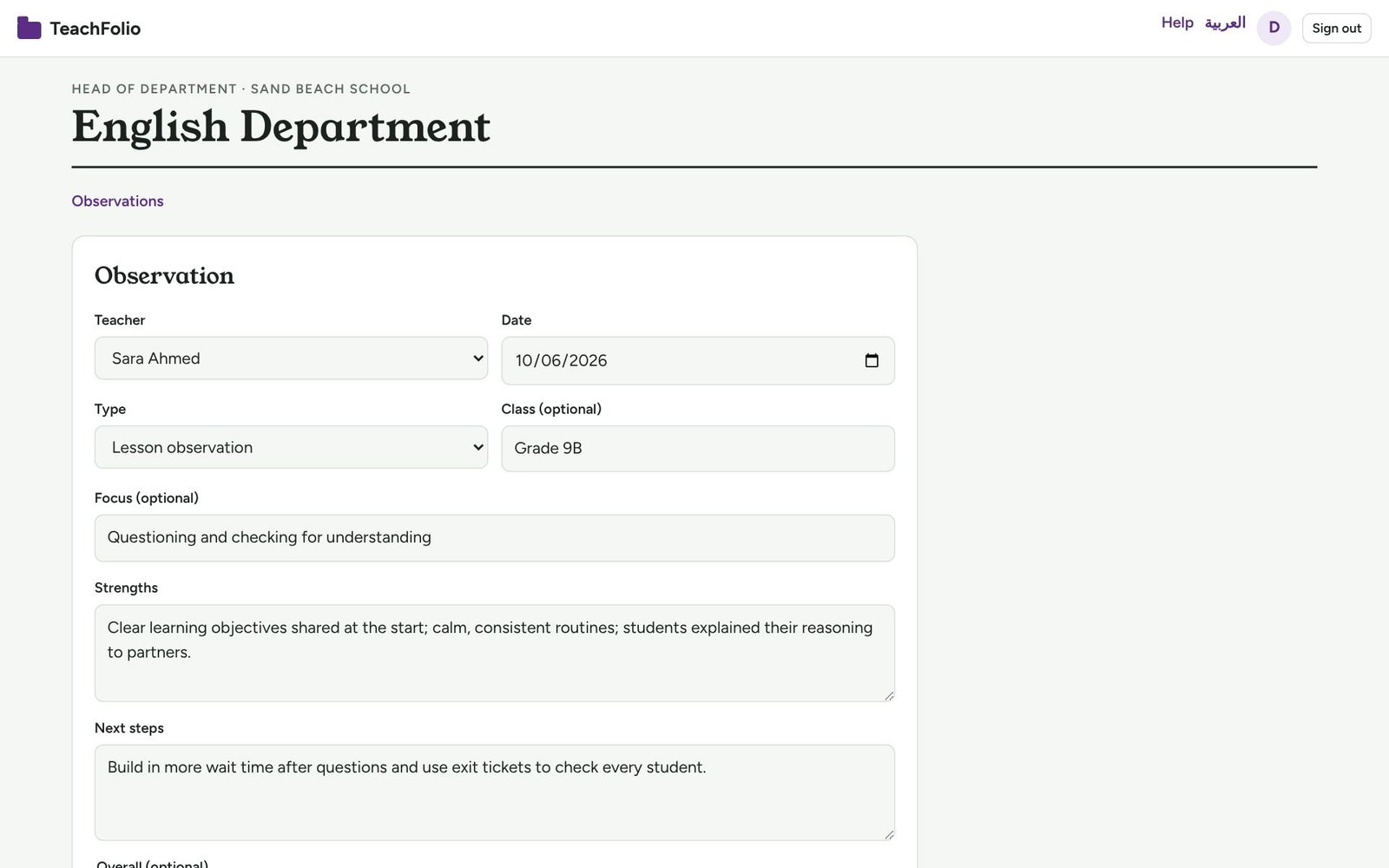
- Agree a focus. One thing, chosen with the teacher: questioning, differentiation, checking for understanding.
- Observe briefly and often. Short walkthroughs between full lesson observations keep the conversation going.
- Write strengths and next steps. Specific, observable, and limited to one or two next steps the teacher can try next week.
- Invite a response. The teacher’s reflection turns feedback into a conversation.
- Connect to goals and standards. Link the observation to the teacher’s growth goal and the relevant standards so progress is visible over time.
Consistency across a department comes from shared focus areas, a common language for levels, and Heads of Department occasionally observing together.
How TeachFolio helps
- Observation and walkthrough records with focus, strengths, next steps and an optional overall level.
- Drafts until shared, so observers can finish their notes before the teacher sees them.
- Teacher responses on every shared observation.
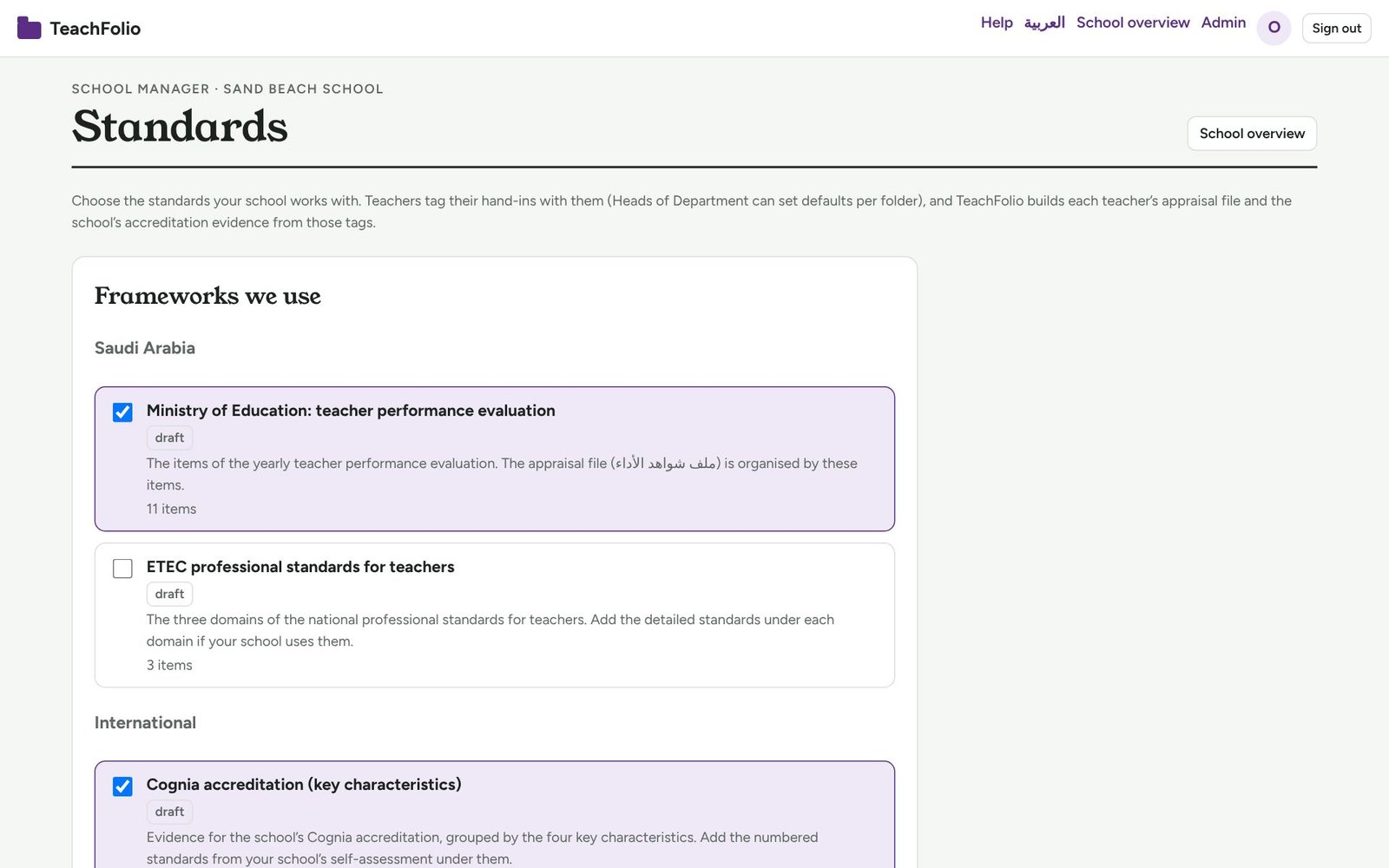
- Standards tags and growth goals connect observations to the appraisal file and to the teacher’s plan.
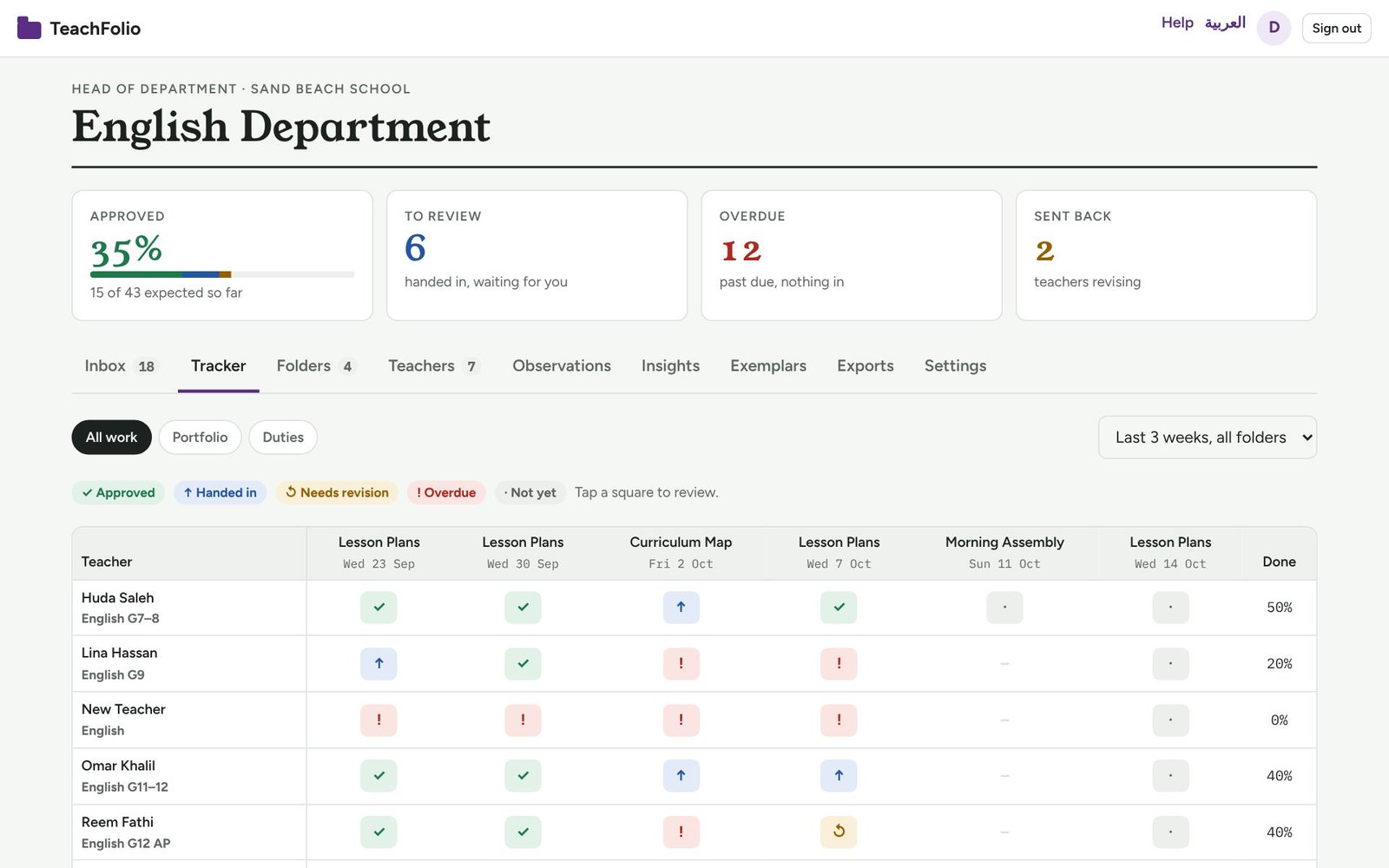
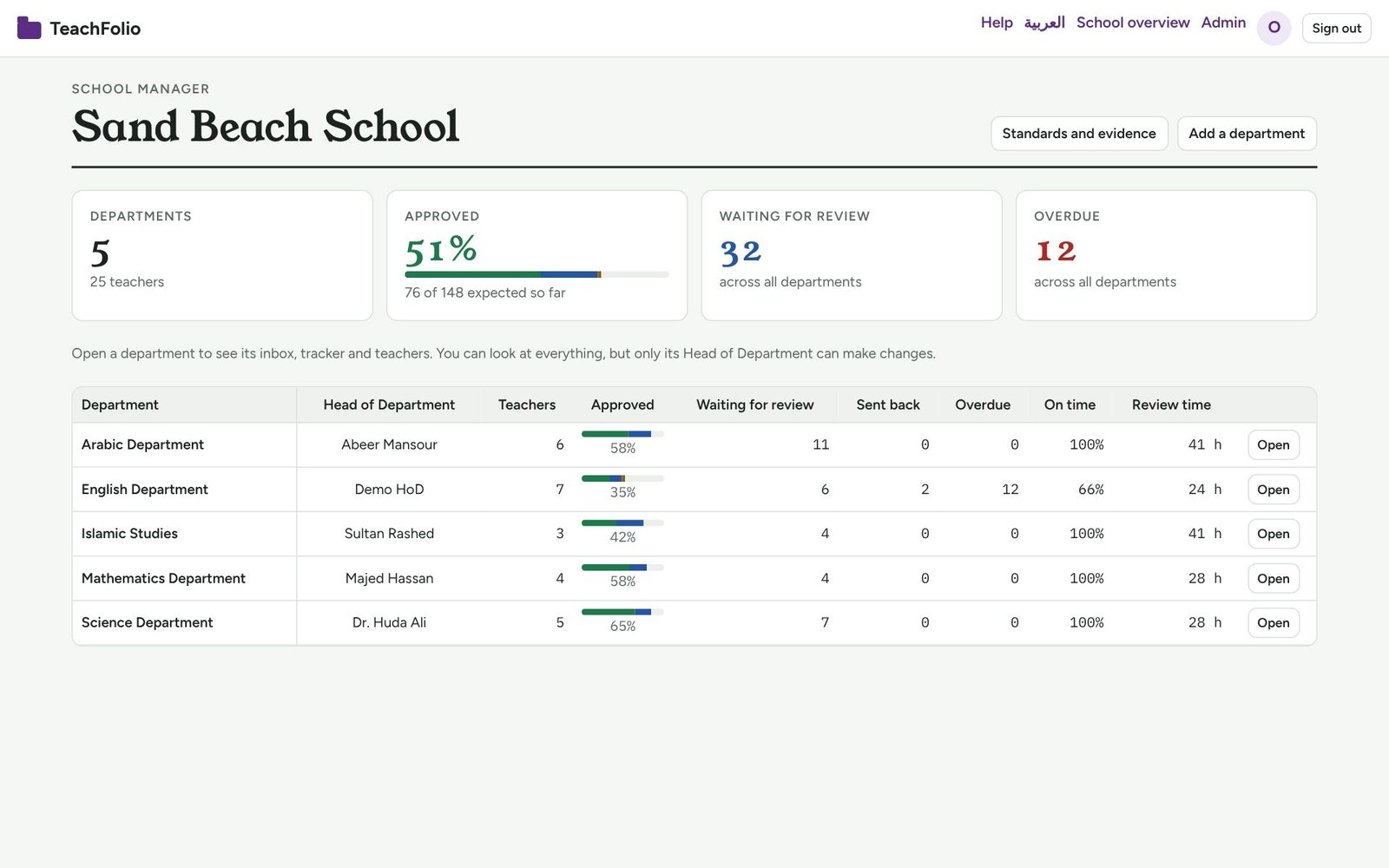
- A department view shows who has been observed this year and who hasn’t.
Observation is most powerful when it is frequent, specific and connected. Then it becomes coaching.
See how TeachFolio does it with your own folders and standards.